Why Vaibhav Sooryavanshi Still Doesn’t Deserve A Place In India’s T20I Squad – Why Vaibhav Sooryavanshi Should Not Be Rushed Into India’s T20I Squad
The Rise of a Teenage Phenomenon
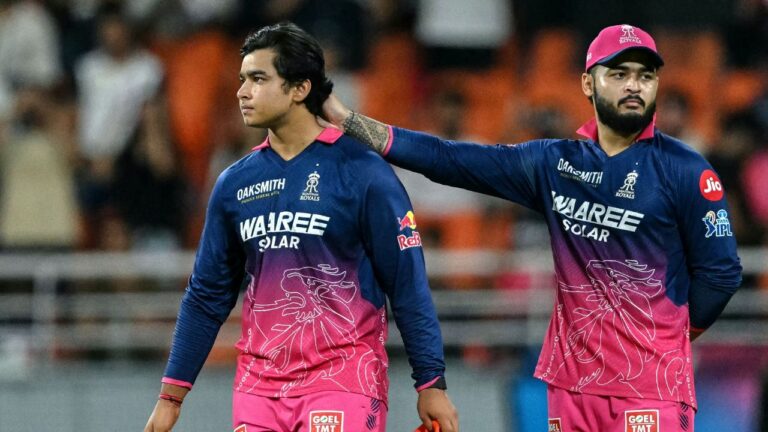
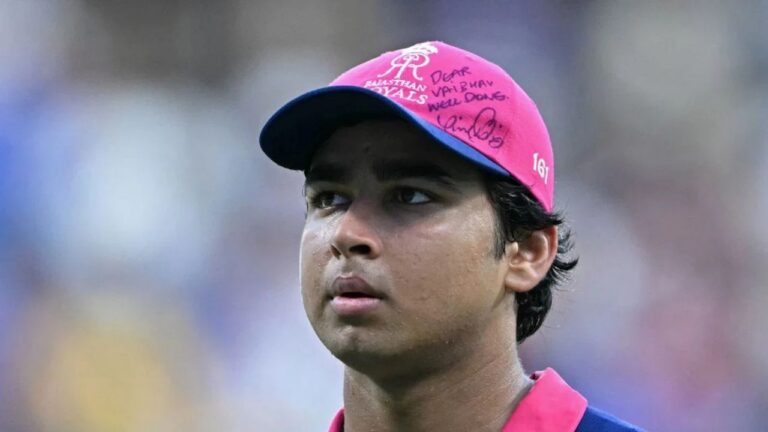
When the Rajasthan Royals secured the signature of Vaibhav Sooryavanshi for INR 1.10 crore, the move was met with widespread skepticism. It is rare to see such significant capital invested in a teenager, leading many to question if the franchise had lost its way. However, as the IPL 2026 season unfolded, that skepticism turned into awe. Sooryavanshi did not just justify his price tag; he became the cornerstone of the Rajasthan Royals’ batting lineup, evolving from an unknown prospect into one of the most feared strikers in the league.
His transition from a perceived “one-season wonder” to a consistent match-winner has naturally sparked intense debate regarding his readiness for international cricket. With a phenomenal strike rate of 242 and over 680 runs in the 2026 campaign, the youngster has shattered records and guided his team to Qualifier 2. Yet, while his talent is undeniable, the leap from IPL stardom to international excellence requires more than just raw power. There are compelling reasons why the BCCI should resist the urge to fast-track him into the Indian T20I squad.
A Settled Winning Formula
The first and most pragmatic reason for restraint is the current state of India’s T20I top order. Following a triumphant T20 World Cup 2026 campaign, India has finally discovered a balanced and lethal opening partnership in Sanju Samson and Abhishek Sharma. This duo has demonstrated remarkable synergy, providing the team with stability and explosive starts that were previously elusive.
International cricket is often governed by the principle of not fixing what is not broken. Samson and Sharma have earned the trust of the team management through high-pressure performances on the world stage. Displacing an established pair that is currently clicking to accommodate a newcomer, regardless of how talented that newcomer is, could disrupt the team’s balance. It is prudent to allow this successful partnership more time to cement their legacy before considering a major shake-up in the playing eleven.
The Tactical Limitation: Fielding and the Impact Player Rule
One cannot discuss Sooryavanshi’s inclusion without addressing the elephant in the room: his fielding. In the modern era of the IPL, the “Impact Player” rule has provided a safety net for specialists who may lack proficiency in one aspect of the game. For the Rajasthan Royals, Sooryavanshi is the ultimate beneficiary of this system. He is frequently deployed solely for his batting, effectively being substituted out when the team takes the field. This tactical maneuvering shields him from the pressures of fielding for long stretches.
International cricket offers no such luxuries. There is no Impact Player rule in T20Is; every player must contribute in all three facets of the game: batting, bowling, and fielding. At the highest level, fielding standards are exceptional, and any weakness is ruthlessly exploited by opponents. Sooryavanshi’s occasional lapses in the field, while manageable in the IPL structure, could become a significant liability for India. He needs time to refine his athleticism and fielding reliability before he can truly be considered a complete international cricketer.
The Virtue of Patience
Finally, we must consider the player’s age and experience. At only 15 years old, Sooryavanshi is operating at a level far beyond his years. However, history is replete with stories of young talents who were burned out or struggled to adapt after being thrust into the limelight too soon. Domestic cricket remains the bedrock of Indian cricket; it is where players forge their character through years of grinding, learning how to handle failure as much as success.
The BCCI should be lauded for nurturing talent, but there is no urgency to rush a 15-year-old into the senior setup. One spectacular IPL season is a brilliant start, but it is not the entirety of a career. By allowing Sooryavanshi to continue his development away from the intense glare of the international spotlight, the selectors might be ensuring a much longer and more successful career for the youngster. For now, the best path forward is to let him grow, polish his skills, and prove his consistency over a longer duration. If he is as special as his current form suggests, his time in the blue jersey will come—but there is absolutely no need to rush the inevitable.

Related Articles